Syslog Collector
The collector receives syslog messages from the network and writes them to syslog storage. Without a running collector, no new messages are accepted.
The collector runs as a Windows service, independent of Syslog Watcher Server and Manager. It keeps collecting while the Server is stopped — for example during Server updates and security patches.
How It Works
Each message passes through these stages before it is written to syslog storage:
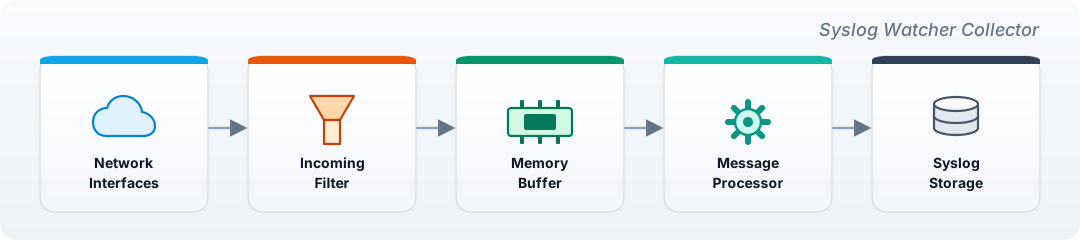
| Network Interfaces |
UDP, TCP, and TLS listeners receive messages from originators. The collector reads the severity of each message, or assigns the default severity when the message has none. See Network Interfaces. |
| Incoming Filter |
Optional (off by default). Discards unwanted messages by severity, keywords, or a regular expression, before they take space in the buffer. See Incoming Filter. |
| Memory Buffer |
Holds messages until they are written, so bursts are not lost while storage catches up. See Memory Buffer. |
| Message Processor |
Assigns the originator ID, checks the originator and license limits, and converts the message text to UTF-8. See Message Processing. |
| Syslog Storage |
Processed messages are written to the file-based syslog storage. Features (export, forward, email, HTTP, scripts) read from this storage later; they are not part of the collector. |
The Server tab shows how many messages were discarded and why; see Discarded Messages.
Collector Topics
-
Network Interfaces — configure UDP, TCP, and TLS listeners
-
Advanced Options — message length, buffers, framing, timeouts
-
Syslog over TLS — server certificates and client authentication
-
-
Message Processing — preprocessor, originator ID rules, and memory buffer
-
Incoming Filter — discard unwanted messages before storage
-
Collector Service — start and stop the collector, startup type, recovery
-
Monitoring — collector status, interfaces, and discarded messages on the Server tab
-
Diagnostic Records — the collector’s own log for startup, license, and interface errors
-
Performance — storage speed, buffer sizing, and high-volume tips
-
Troubleshooting — common collector problems by symptom